
Mapping GPCR-RAMP complexes with MolBoolean
Kotliar IB, Bendes A, Dahl L, Chen Y, Saarinen M, Ceraudo E, Dodig-Crnković T, Uhlén M, Svenningsson P, Schwenk JM, Sakmar TP. Multiplexed mapping of the interactome of GPCRs with receptor activity-modifying proteins. Sci Adv. 2024 Aug 2;10(31):eado9959.
GPCRs (G Protein-Coupled Receptors) are a large family of cell surface receptors that play a key role in cellular communication and signal transduction. RAMPs (Receptor Activity-Modifying Proteins) are proteins that interact with GPCRs to modify their function, regulating GPCR trafficking and ligand specificity, thus influencing the receptor's signaling properties.
GPCRs and RAMPs protein-protein interactions are crucial for understanding GPCR signaling and have significant implications for drug discovery.
A new study by Kotliar et al, (Sci Adv. 2024) investigates the interactions between 215 GPCRs and 3 RAMPs, covering all GPCR subfamilies. Utilizing a state-of-the-art multiplexed suspension bead array (SBA) strategy, coupled with a new protein-protein interaction technology (MolBoolean™, Atlas Antibodies), the team identified 23 GPCRs forming complexes with RAMPs, many of which (at least 50) were previously unreported.
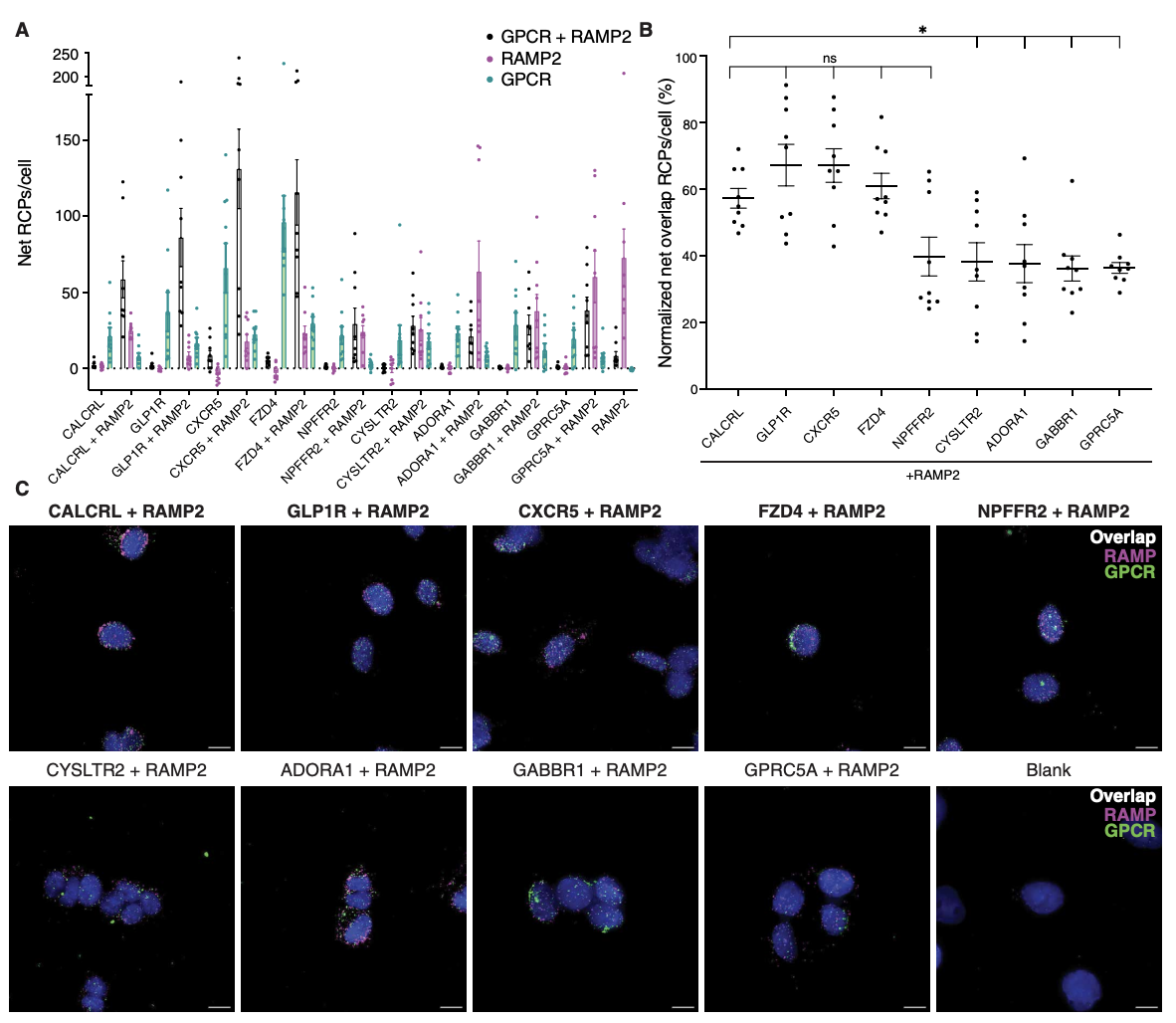
The MolBoolean method was employed to detect and quantify endogenous GPCR-RAMP complexes in cell membranes without the need for heterologous overexpression and membrane solubilization. MolBoolean was used to test interactions between RAMP2 and eight specific GPCRs (selected from those included in the SBA assay screen) in SK-N-MC cells. Cells were stained with antibodies targeting each GPCR alone or in combination with an antibody targeting RAMP2.
Using the MolBoolean approach, researchers were able to quantify the relative levels of GPCR-RAMP2 complexes compared to total GPCR and RAMP2 levels.
The method allowed for the comparison of the number of RCPs per cell between different GPCR-RAMP pairs and a positive control (CALCRL-RAMP2), helping to establish the relative strength and prevalence of these interactions in situ.
Why MolBoolean?
The new MolBoolean technology was crucial for validating and quantifying the endogenous interactions between GPCRs and RAMPs in a native cellular context. This provided robust evidence for the physiological relevance of these interactions and complemented the findings from the SBA assays by confirming that these interactions occur naturally within cell membranes.