
What is the Role of HNF-1B in Gynecologic Cancer Diagnosis? A Biomarker Case Study
In gynecologic pathology, the accurate differentiation between rare mesonephric carcinomas and more common clear cell carcinomas is a significant diagnostic challenge due to their overlapping features. Getting the diagnosis right is critical for patient prognosis and treatment, demanding the most precise tools available to pathologists.
A Pivotal Comparative Study
A pivotal study by Pors J et al. (2020) sought to bring clarity to this issue by performing a head-to-head comparison of three key biomarkers: HNF-1β, Napsin-A, and AMACR.
The Need for a Gold-Standard Benchmark
To confidently assess the diagnostic utility of HNF-1β in this context, the researchers required a benchmark antibody known for its unwavering specificity and lot-to-lot consistency. They selected our best-selling Anti-HNF1B (AMAb90733) monoclonal antibody to ensure their IHC results would be clear, reliable, and unambiguous.
Their findings provided crucial clarity for the pathology community: for this specific diagnostic challenge, Napsin-A and AMACR offer superior discriminatory power.
The Need for a Gold-Standard Benchmark
To confidently assess the diagnostic utility of HNF-1β in this context, the researchers required a benchmark antibody known for its unwavering specificity and lot-to-lot consistency. They selected our best-selling Anti-HNF1B (AMAb90733) monoclonal antibody to ensure their IHC results would be clear, reliable, and unambiguous.
Their findings provided crucial clarity for the pathology community: for this specific diagnostic challenge, Napsin-A and AMACR offer superior discriminatory power.
The Expert Pillar: Enabling Definitive Science
This is what great science looks like. It isn't always about finding what works; it's about definitively understanding the boundaries of a biomarker's utility. Providing researchers with ultra-reliable tools is essential for this process, as it removes any doubt that the results are due to the underlying biology, not a faulty reagent.
We are proud that our antibodies are trusted by leading institutions to answer the tough questions that advance clinical knowledge. This study is a perfect example of how our commitment to rigorous validation provides the confidence researchers need to make definitive conclusions that improve diagnostic precision.
Our Anti-HNF1B (AMAb90733) monoclonal antibody was used to provide the clear, reproducible staining essential for this comparative study.
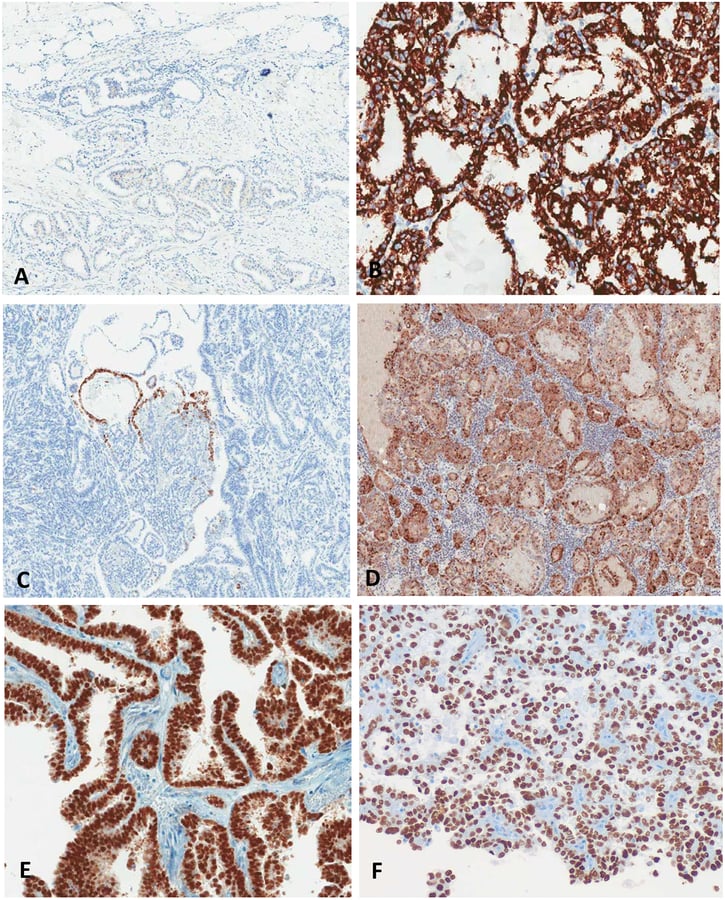
The image shows the differential staining patterns in mesonephric carcinoma and clear cell carcinoma
(Pors J et al. 2020).
"Napsin-A and AMACR are superior to HNF-1β in distinguishing between mesonephric carcinomas and clear cell carcinomas of the gynecologic tract" Read full article here