
Our anti-P2RY12 and Alzheimer's disease
Bosch, M.E et al. Sodium oligomannate alters gut microbiota, reduces cerebral amyloidosis and reactive microglia in a sex-specific manner. Mol Neurodegeneration 19, 18 (2024).
P2RY12 is a gene that encodes for the P2Y12 receptor, which is primarily expressed in microglial cells in the brain. It serves as a marker for homeostatic microglia and plays a role in regulating microglial function, maintaining brain homeostasis, and modulating immune responses.
Our anti-P2RY12 Antibody (HPA014518) was used in a study (Bosch, et al. 2024) for immunofluorescence staining and immunohistochemistry to investigate the effects of GV-971 treatment on microglial activation state in the presence of Aβ amyloidosis. '
Immunofluorescence staining with anti-P2RY12 antibody showed that GV-971 treatment increased the number of P2RY12+ microglia in male mice, indicating a shift towards a more homeostatic microglial phenotype. This effect was not observed in female mice, suggesting a sex-specific effect of the treatment.
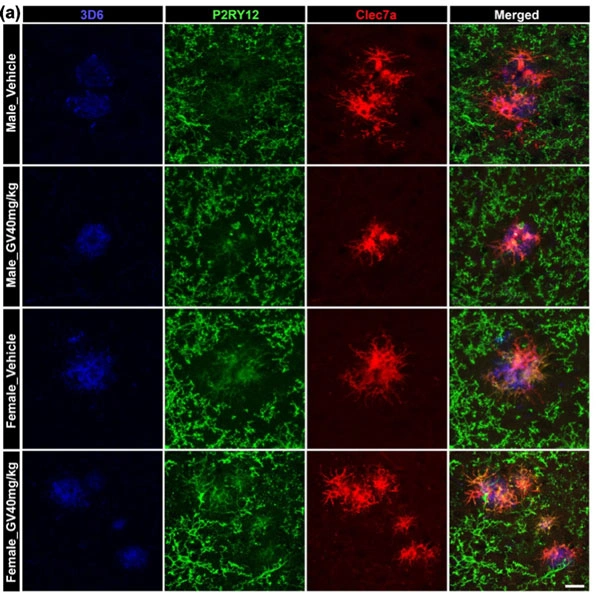
The finding that GV-971 alters gut microbiota, reduces cerebral amyloidosis, and reactive microglia in a sex-specific manner, highlights the potential therapeutic effect of GV-971 in Alzheimer's disease and suggests that targeting the microbiota-microglia-amyloid axis may be a promising approach for treating neuroinflammation and plaque pathology in a sex-dependent manner.
Additionally, considering sex differences in the development and treatment of Alzheimer's disease can help guide future research and clinical trials to develop more personalized and effective treatments.
Read full article here.