
Our anti-CKB polyclonal and Alzheimer's disease (AD)
Zheng T, Kotol D, Sjöberg R, Mitsios N, Uhlén M, Zhong W, Edfors F, Mulder J. Characterization of reduced astrocyte creatine kinase levels in Alzheimer's disease. Glia. 2024 Jun 10.
The role of brain creatine kinase (CKB) in Alzheimer's disease (AD).
The primary aim was to examine the levels and modifications of CKB in the brains of individuals with Alzheimer's disease (AD), dementia with Lewy bodies (DLB), and age-matched controls. The study sought to understand how CKB levels and function are affected by AD and related pathologies.
The study used the anti-CKB Triple A Polyclonal (Cat. HPA001254) and the anti-S100ß PrecisA Monoclonal (Cat. AMAb91038) antibodies from Atlas Antibodies in immunofluorescence and Western blot to label astrocytes in the human cerebral cortex of Alzheimer's disease patients and assess proteins correlation with disease severity and plaque load.
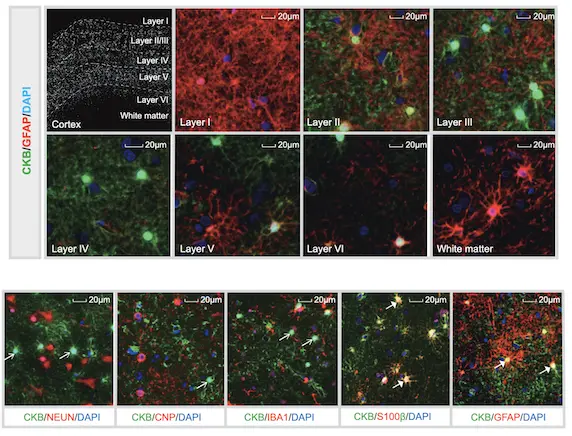
The anti-CNP PrecisA monoclonal antibody (Cat. AMAb91068) was used in immunohistochemistry as a marker for oligodendrocytes.
Furthermore the anti-APOE Triple A Polyclonal antibody (Cat. HPA065539) was utilized in immunohistochemistry to confirm the expression of Apolipoprotein E, a crucial protein in lipid metabolism that is genetically associated with Alzheimer's disease.
Result show a significant reduction in CKB immunoreactivity in AD brains (but no changes in total CKB levels) which correlated with increased plaque load, severity of tau pathology, and Lewy body pathology.
These findings underscore the importance of astrocyte function in maintaining brain homeostasis and suggest that CKB and its modifications could serve as potential biomarkers for early-stage energy deficits in Alzheimer's disease.
Read the full study